Integrated Algal–Microbial Consortia for Wastewater Treatment: Mechanisms, Performance and Future Perspectives
DOI:
https://doi.org/10.63095/NBSEH.26.785520Keywords:
Agricultural mulching films, Recycling barriers, Circular economyAbstract
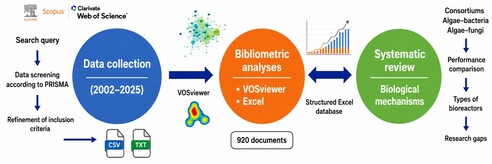
Algae, especially microalgae and macroalgae, are photosynthetic organisms that have been used for environmental purposes for a long time, which has been covered in depth through research. The major environmental uses of wastewater treatment, including nutrient recovery and reduction of the organic load, are mentioned in the literature. Microalgae are characterized by a very rapid growth, a huge potential to assimilate nitrogen and phosphorus, and an ability to form symbiotic relationships with other microorganisms, whereas macroalgae are mainly recognized for their high biomass production and their capacity to absorb pollutants in the water environment. This review paper has adopted the PRISMA method to strictly select research papers on biological consortia of the following: microalgae, bacteria, microalgae–fungi, macroalgae, bacteria, and macroalgae–fungi. Assessment of the chosen articles indicates that the cohabitation of microalgae and bacteria is the most favored theme in the literature by far, given its well-documented effectiveness and biological stability. In addition, bibliometric analyses show that there has been increasing attention to microalgae–fungi consortia since 2015, indicating new trends towards biofloc formation, which greatly facilitates biomass separation. On the other hand, consortia involving macroalgae in association with microorganisms (either bacteria or fungi) are still in their infancy in research.
Downloads
References
Waddi, K., El Khayat, S. S., Deblij, S., Benjelloun, I., Foughal, T., Abida, B., Khataby, K., Bahlaouan, B., & Boutaleb, N., 2025, Unregulated dialysis effluents and emerging health risks: Lessons from Casablanca, Morocco. H2Open Journal 8(6), 515–535. https://doi.org/10.2166/h2oj.2025.035
Waddi, K., El Khayat, S. S., Deblij, S., Benjelloun, I., Jmaili, K., Radi Benjelloun, G., Mahmoudi, M., Bahlaouan, B., & Boutaleb, N., 2025, Hospital solid waste: Sources, risks, and the path to sustainable management. Natural Built Social Environment Health 1(5). https://doi.org/10.63095/NBSEH.25.674928
Sarwat, I., Ghazala, J., Mateen, A., Zakia, K., Fakhar, U. N., Rida, Z., Zunaira, S., Hassan, A., Khush, B. S., & Farkhanda, M., 2023, Toxicity of heavy metals from industrial effluents affecting oxidative stress, liver enzymes, and antioxidant activity in brain homogenates of Oreochromis niloticus. Scientific Reports 13, 19936. https://doi.org/10.1038/s41598-023-47366-4
Göncü, S., Şimşek Uygun, B., & Atakan, S., 2025, Nitrogen and phosphorus removal from wastewater using Chlorella vulgaris and Scenedesmus quadricauda microalgae with a batch bioreactor. International Journal of Environmental Science and Technology 22, 11877–11892. https://doi.org/10.1007/s13762-025-06380-x
Li, X., Deng, Y., Li, X., Ma, X., Wang, J., & Li, J., 2020, Integration of marine macroalgae (Chaetomorpha maxima) with a moving bed bioreactor for nutrient removal from maricultural wastewater. Archaea 2020, 1–13. https://doi.org/10.1155/2020/8848120
Mohsenpour, S. F., Hennige, S., Willoughby, N., Adeloye, A., & Gutierrez, T., 2021, Integrating microalgae into wastewater treatment: A review. Science of the Total Environment 752, 142168. https://doi.org/10.1016/j.scitotenv.2020.142168
Schulze, P. S. C., Carvalho, C. F. M., Pereira, H., Gangadhar, K. N., Schüler, L. M., Santos, T. F., Varela, J. C. S., & Barreira, L., 2017, Urban wastewater treatment by Tetraselmis sp. CTP4 (Chlorophyta). Bioresource Technology 223, 175–183. https://doi.org/10.1016/j.biortech.2016.10.027
Abdelfattah, A., Ali, S. S., Ramadan, H., El-Aswar, E. I., Eltawab, R., Ho, S. H., Elsamahy, T., Li, S., El-Sheekh, M. M., Schagerl, M., Kornaros, M., & Sun, J., 2023, Microalgae-based wastewater treatment: Mechanisms, challenges, recent advances, and future prospects. Environmental Science and Ecotechnology 13, 100205. https://doi.org/10.1016/j.ese.2022.100205
Macchiavello, J., & Bulboa, C., 2014, Nutrient absorption efficiency of Gracilaria chilensis and Ulva lactuca in an integrated multitrophic system with red abalone Haliotis rufescens. Latin American Journal of Aquatic Research 42, 523–533. https://doi.org/10.3856/vol42-issue3-fulltext-12
Bews, E., Booher, L., Polizzi, T., Long, C., Kim, J. H., & Edwards, M. S., 2021, Effects of salinity and nutrients on metabolism and growth of Ulva lactuca: Implications for bioremediation of coastal watersheds. Marine Pollution Bulletin 166, 112199. https://doi.org/10.1016/j.marpolbul.2021.112199
Kube, M., Jefferson, B., Fan, L., & Roddick, F., 2018, The impact of wastewater characteristics, algal species selection, and immobilisation on simultaneous nitrogen and phosphorus removal. Algal Research 31, 478–488. https://doi.org/10.1016/j.algal.2018.01.009
Charef, I., Fathi, A., Ozi, F.Z., Asbai, Z., Radi Benjelloun, G., Waddi, K., Bahlaouan, B., El Antri, S., Boutaleb, N., 2024, Use of mixed algae–fungi biomass in mutualistic relationship with natural marine carriers in an MBBR reactor for ecological treatment of effluents from fish processing industry in Morocco. Desalination and Water Treatment 317, 100020. https://doi.org/10.1016/j.dwt.2024.100020
Sacristan de Alva, M., Oceguera Vargas, I., Lamas Cosío, E., León Aguirre, K., & Arcega Cabrera, F., 2024, Removal of nitrogen, phosphorus, organic matter, and heavy metals from pig farming wastewater using a microalgae–bacteria consortium. Bulletin of Environmental Contamination and Toxicology 113, 58. https://doi.org/10.1007/s00128-024-03962-2
Leng, L., Li, W., Chen, J., Leng, S., Chen, J., Wei, L., Peng, H., Li, J., Zhou, W., & Huang, H., 2021, Co-culture of fungi–microalgae consortium for wastewater treatment: A review. Bioresource Technology 330, 125008. https://doi.org/10.1016/j.biortech.2021.125008
Moher, D., Liberati, A., Tetzlaff, J., Altman, D. G., & The PRISMA Group, 2009, Preferred reporting items for systematic reviews and meta-analyses: The PRISMA statement. PLoS Medicine 6, e1000097. https://doi.org/10.1371/journal.pmed.1000097
Guiry, M. D., 2012, How many species of algae are there?. Journal of Phycology 48, 1057–1063. https://doi.org/10.1111/j.1529-8817.2012.01222.x
Rodríguez-Prieto, C., Ballesteros, E., Boisset, F., & Afonso-Carrillo, J., 2013, Guía de las macroalgas y fanerógamas marinas del Mediterráneo occidental. Omega. https://www.researchgate.net/publication/357795728_Guia_de_las_macroalgas_y_fanerogamas_marinas_del_Mediterraneo_Occidental
Gincley, B., Khan, F., Hartnett, E., Fisher, A., & Pinto, A. J., 2024, Introducing ARTiMiS: A low-cost flow imaging microscope for microalgal monitoring. Environmental Science & Technology 58(30), 13540–13551.https://doi.org/10.1021/acs.est.4c01928
Guiry, M. D., Guiry, G. M., Morrison, L., Rindi, F., Valenzuela-Miranda, S., Mathieson, A. C., Parker, B. C., Langangen, A., John, D. M., Bárbara, I., Carter, C. F., Kuipers, P., & Garbary, D. J., 2014, AlgaeBase: An online resource for algae. Cryptogamie, Algologie 35, 105–115. https://doi.org/10.7872/crya.v35.iss2.2014.105
Prescott, G. W., 1954, How to Know the Freshwater Algae: An Illustrated Key for Identifying the More Common Freshwater Algae to Genus. W.C. Brown Company. https://doi.org/10.5962/bhl.title.5626
Madigan, M. T., & Martinko, J. M., 2010, Brock Biology of Microorganisms, 11th ed. Pearson Benjamin Cummings. https://www.researchgate.net/publication/41584156_Brock_Biology_of_Microorganisms_11th_edn_Michael_T_Madigan_John_M_Martinko_eds
Chini Zittelli, G., Lauceri, R., Faraloni, C., Silva Benavides, A. M., & Torzillo, G., 2023, Valuable pigments from microalgae: Phycobiliproteins, primary carotenoids, and fucoxanthin. Photochemical & Photobiological Sciences 22, 1733–1789. https://doi.org/10.1007/s43630-023-00407-3
Jacob Lopes, E., Scoparo, C. H. G., Lacerda, L. M. C. F., & Franco, T. T., 2009, Effect of light cycles (night/day) on CO₂ fixation and biomass production by microalgae in photobioreactors. Chemical Engineering and Processing: Process Intensification 48, 306–310. https://doi.org/10.1016/j.cep.2008.04.007
Marchese, A., Lima, S., Cosenza, A., Giambalvo, F., & Scargiali, F., 2025, Effects of light quality adjustment in microalgal cultivation: Flashing light and wavelength shifts in photobioreactor design. Processes 13, 1159. https://doi.org/10.3390/pr13041159
Adtani, D., Goswami, M., & Solanki, H., 2025, Algal pigments: Sustainable bio-actives for enhanced food, therapeutics and cosmetics. Life Science Leaflets 181, 1–21. https://petsd.org/ojs/index.php/lifesciencesleaflets/article/view/1810/1550
Tesse, R., Boutaleb, F., Bahlaouan, B., Brett-Crowther, M., El Antri, S., & Boutaleb, N., 2025, Micrografting and Other Regeneration Techniques for the Argan Tree (Argania spinosa): A PRISMA-Based Systematic Review and Meta-Analysis. Natural Built Social Environment Health 1(3), 100-124. https://doi.org/10.63095/NBSEH.25.180342
Oruganti, R. K., Katam, K., Show, P. L., Gadhamshetty, V., Upadhyayula, V. K. K., & Bhattacharyya, D., 2022, A comprehensive review on the use of algal–bacterial systems for wastewater treatment with emphasis on nutrient and micropollutant removal. Bioengineered 13, 10412–10453. https://doi.org/10.1080/21655979.2022.2056823
United Nations Department of Economic and Social Affairs, 2021, World Population Prospects 2017 – Volume I: Comprehensive Tables. United Nations. https://doi.org/10.18356/9789210001014
Christou, A., Beretsou, V. G., Iakovides, I. C., Karaolia, P., Michael, C., Benmarhnia, T., Chefetz, B., Donner, E., Gawlik, B. M., Lee, Y., Lim, T. T., Lundy, L., Maffettone, R., Rizzo, L., Topp, E., & Fatta-Kassinos, D., 2024. Sustainable wastewater reuse for agriculture. Nature Reviews Earth & Environment 5, 504–521. https://doi.org/10.1038/s43017-024-00560-y
United Nations Environment Programme, 2017, World Water Development Report: Wastewater – The Untapped Resource. https://wedocs.unep.org/items/06a07092-8f3b-4854-b72a-5a247f2615f5
Samer, M., 2015. Biological and chemical wastewater treatment processes. Wastewater Treatment Engineering. InTech, pp. 1–50. https://doi.org/10.5772/61250
O’Connor, J., Bolan, N. S., Kumar, M., Sutradhar, A. N., Ahmed, M. B., Bolan, S. S., Vithanage, M., Rinklebe, J., Mukhopadhyay, R., Srivastava, P., Sarkar, B., Bhatnagar, A., Wang, H., Siddique, K. H. M., & Kirkham, M. B., 2022. Distribution, transformation and remediation of poly- and per-fluoroalkyl substances (PFAS) in wastewater sources. Process Safety and Environmental Protection 164, 91–108. https://doi.org/10.1016/j.psep.2022.06.002
Arcila, J. S., & Buitrón, G., 2017, Influence of solar irradiance levels on the formation of microalgae–bacteria aggregates for municipal wastewater treatment. Algal Research 27, 190–197. https://doi.org/10.1016/j.algal.2017.09.011
Katam, K., Shimizu, T., Soda, S., & Bhattacharyya, D., 2020, Performance evaluation of two trickling filters removing LAS and caffeine from wastewater: Light reactor (algal–bacterial consortium) vs dark reactor (bacterial consortium). Science of the Total Environment 707, 135987. https://doi.org/10.1016/j.scitotenv.2019.135987
Sharma, M. K., Khursheed, A., & Kazmi, A. A., 2014, Modified septic tank–anaerobic filter unit as a two-stage onsite domestic wastewater treatment system. Environmental Technology 35, 2183–2193. https://doi.org/10.1080/09593330.2014.896950
Hülsen, T., Barry, E. M., Lu, Y., Puyol, D., Keller, J., & Batstone, D. J., 2016, Domestic wastewater treatment with purple phototrophic bacteria using a novel continuous photo-anaerobic membrane bioreactor. Water Research 100, 486–495. https://doi.org/10.1016/j.watres.2016.04.061
Noukeu, N. A., Gouado, I., Priso, R. J., Ndongo, D., Taffouo, V. D., Dibong, S. D., & Ekodeck, G. E., 2016. Characterization of effluent from food processing industries and stillage treatment trial with Eichhornia crassipes (Mart.) and Panicum maximum (Jacq.). Water Resources and Industry 16, 1–12. https://doi.org/10.1016/j.wri.2016.07.001
Öztürk, A., Aygun, A., & Nas, B., 2019, Application of sequencing batch biofilm reactor (SBBR) in dairy wastewater treatment. Korean Journal of Chemical Engineering 36, 248–254. https://doi.org/10.1007/s11814-018-0198-2
Amini, M., Younesi, H., Lorestani, A. A. Z., & Najafpour, G., 2013, Determination of optimum conditions for dairy wastewater treatment in UAASB reactor for removal of nutrients. Bioresource Technology 145, 71–79. https://doi.org/10.1016/j.biortech.2013.01.111
Omar, B. M., Zyadah, M. A., Ali, M. Y., & El-Sonbati, M. A., 2024, Pre-treatment of composite industrial wastewater by Fenton and electro-Fenton oxidation processes. Scientific Reports 14, 27906. https://doi.org/10.1038/s41598-024-78846-w
Sun, L., Wan, S., Yu, Z., Wang, Y., & Wang, S., 2012, Anaerobic biological treatment of high-strength cassava starch wastewater in a new type up-flow multistage anaerobic reactor. Bioresource Technology 104, 280–288. https://doi.org/10.1016/j.biortech.2011.11.070
Padri, M., Boontian, N., Teaumroong, P., & Piasai, C., 2022, Co-culture of microalga Chlorella sorokiniana with syntrophic Streptomyces thermocarboxydus in cassava wastewater for wastewater treatment and biodiesel production. Bioresource Technology 347, 126732. https://doi.org/10.1016/j.biortech.2022.126732
Anh, H. T. H., Shahsavari, E., Bott, N. J., & Ball, A. S., 2021, Bioaugmentation of seafood processing wastewater enhances the removal of inorganic nitrogen and chemical oxygen demand. Aquaculture 542, 736818. https://doi.org/10.1016/j.aquaculture.2021.736818
Hamimed, S., Gamraoui, A., Landoulsi, A., & Chatti, A., 2022, Bio-nanocrystallization of NaCl using saline wastewaters through biological treatment by Yarrowia lipolytica. Environmental Technology & Innovation 26, 102338. https://doi.org/10.1016/j.eti.2022.102338
Choi, Y.-Y., Baek, S.-R., Kim, J.-I., Choi, J.-W., Hur, J., Lee, T.-U., Park, C.-J., & Lee, B. J., 2017. Characteristics and biodegradability of wastewater organic matter in municipal wastewater treatment plants collecting domestic wastewater and industrial discharge. Water 9(6), 409. https://doi.org/10.3390/w9060409
Singh Rana, R., Singh, P., Kandari, V., Singh, R., Dobhal, R., & Gupta, S., 2014. A review on characterization and bioremediation of pharmaceutical industries’ wastewater: an Indian perspective. Applied Water Science 7, 1–12. https://doi.org/10.1007/s13201-014-0225-3
Zou, R., Tang, K., Hambly, A. C., Wünsch, U. J., Andersen, H. R., Angelidaki, I., & Yifeng, 2022. When microbial electrochemistry meets UV: Applicability to high-strength real pharmaceutical industry wastewater. Journal of Hazardous Materials 423, 127151. https://doi.org/10.1016/j.jhazmat.2021.127151
Fathi, A., Khalki, Y., Bahlaouan, B., El Bouqdaoui, K., Charef, I., Boutaleb, F., Bennani, M., El Antri, S., & Boutaleb, N., 2025, Implementation of nature-based biofilm carriers for sustainable bioremediation: A novel MBBR approach to treat fishery effluents in the Greater Casablanca Region. Natural Built Social Environment Health 1(4), 80–95. https://doi.org/10.63095/NBSEH.25.195556
Deblij, S., Bahlaouan, B., Boutaleb, N., Hassoune, J., Foughal, T., Bennani, M., & El Antri, S. (2023). Electrocoagulation treatment of hospital effluent in the Casablanca-Settat Region of Morocco. Desalination and Water Treatment, 294, 71–78. https://doi.org/10.5004/dwt.2023.29563
Drechsel, P., Qadir, M., & Wichelns, D., 2015, Wastewater: Economic Asset in an Urbanizing World. Springer. https://doi.org/10.1007/978-94-017-9545-6
Smith, V. H., & Schindler, D. W., 2009, Reply to Russell and Connell: Eutrophication science moving into the future. Trends in Ecology & Evolution 24, 528–529. https://doi.org/10.1016/j.tree.2009.06.001
Corcoran, E., C. Nellemann, E. Baker, R. Bos, D. Osborn, & H. Savelli (eds). 2010. Sick Water? The central role of wastewater management in sustainable development. United Nations Environment Programme, https://wedocs.unep.org/rest/api/core/bitstreams/28ed6995-5704-49cf-b278-0170e0f19f05/content
Chu, R., Li, S., Zhu, L., Yin, Z., Hu, D., Liu, C., & Mo, F., 2021, Co-cultivation of microalgae with filamentous fungi for wastewater treatment and biofuel production. Renewable and Sustainable Energy Reviews 139, 110689. https://doi.org/10.1016/j.rser.2020.110689
Zheng, X., Liu, R., Li, K., Sun, J., Wang, K., Shao, Y., Hu, Z., Zhu, J., Pan, Z., & Nakhla, G., 2025, Microalgae–bacteria symbiosis enhanced nitrogen removal from wastewater in an inversed fluidized bed biofilm reactor. Frontiers in Microbiology 16, 1591974. https://doi.org/10.3389/fmicb.2025.1591974
Jia, X., He, X., Feng, J., Shen, J., & Wang, X., 2022, Optimization of conditions for purification of wastewater treatment plant effluent by microalgae bacteria symbiotic system. Journal of Environmental Science and Engineering 12 (4), 1177-1184. https://doi.org/10.12153/j.issn.1674-991X.20210215
Monteiro dos Santos, L., Barbosa da Silva, J. C., de Farias Silva, C. E., Villar da Gama, B. M., Almeida Medeiros, J., Markou, G., Rosas Garcia Almeida, R. M., & Abud, A. K. S., 2024, Co-culture of Tetradesmus obliquus and filamentous fungus Cunninghamella echinulata improves tertiary treatment of cheese whey wastewater. Processes 12, 1573. https://doi.org/10.3390/pr12081573
de Andrade, F. P., da Silva Gonçalves, A. H., de Farias Silva, C. E., Macário, L. R., Oliveira Nascimento da Silva, J. V., Villar da Gama, B. M., Rosas Garcia Almeida, R. M., & Tonholo, J., 2024, Treatment of oil-produced water using a fungus–microalga consortium. Energy, Ecology and Environment 9, 144–158. https://doi.org/10.1007/s40974-023-00307-3
Li, J., Zheng, Z., Wang, Y., Lukwambe, B., & Yang, Z., 2025, Nutrient removal performance and microbial community analysis in an integrated wastewater treatment system with macroalgae (Ulva meridionalis) and Bacillus. International Biodeterioration & Biodegradation 198, 106006. https://doi.org/10.1016/j.ibiod.2025.106006
Yu, M., Wang, L., Feng, P., Wang, Z., & Zhu, S., 2024, Treatment of mixed wastewater by vertical rotating microalgae–bacteria symbiotic biofilm reactor. Bioresource Technology 393, 130057. https://doi.org/10.1016/j.biortech.2023.130057
Ye, T., Li, M., Lin, Y., Wei, B., & Su, Z., 2024, Enhanced nitrogen and phosphorus removal from mariculture water using immobilized bacteria and macroalgae. Journal of Environmental Management 363, 123004. https://doi.org/10.1016/j.jenvman.2024.123004
Kilaru Harsha Vardhan, K., Senthil Kumar, P., & Panda, R. C., 2019, A review on heavy metal pollution, toxicity, and remedial measures. Journal of Molecular Liquids 290, 111197. https://doi.org/10.1016/j.molliq.2019.111197
Pavithra, K. G., Kumar, P. S., Jaikumar, V., Vardhan, K. H., & SundarRajan, P., 2020, Microalgae for biofuel production and removal of heavy metals: A review. Environmental Chemistry Letters 18, 1905–1923. https://doi.org/10.1007/s10311-020-01046-1
Kafil, M., Berninger, F., Koutra, E., & Kornaros, M., 2022, Utilization of Scenedesmus quadricauda for hexavalent chromium bioremediation and biodiesel production. Bioresource Technology 346, 126665. https://doi.org/10.1016/j.biortech.2021.126665
Al Juburi, W., Ibrahim, M., & Al Katib, M., 2022, Synergistic efficiency between fungi and algae for wastewater treatment. Journal of Research in Applied Sciences and Biotechnology 1, 181–186. https://doi.org/10.55544/jrasb.1.4.26
Silva, A., Delerue-Matos, C., Figueiredo, S., & Freitas, O., 2019, Use of algae and fungi for removal of pharmaceuticals by bioremediation and biosorption processes: A review. Water 11, 1555. https://doi.org/10.3390/w11081555
Downloads
Additional Files
Published
How to Cite
Issue
Section
License
Copyright (c) 2026 Ikrame Charef, Meriem Mahmoudi, Ghita Radi Benjelloun, Khawla Waddi, Alla Silkina, Bouchaib Bahlaouan, Nadia Boutaleb

This work is licensed under a Creative Commons Attribution-NonCommercial 4.0 International License.
This work is licensed under a Creative Commons Attribution-NonCommercial 4.0 International License (CC BY-NC 4.0).
Readers may copy, distribute, and adapt the work for non-commercial purposes, provided the original author and source are credited.
For full licence details, please visit https://creativecommons.org/licenses/by-nc/4.0/.